When Love Doesn't Feel Like Enough
Why behavior is often a form of communication, and how attachment and connection support real healing.
Presentan: Jeanette Yoffe, Dr. Alicia WilliamsGrabado en ago 202660 minInglés · Subtítulos (CC)
Lo que aprenderás
- Why love alone cannot fix a nervous system stuck in survival mode, and why a child may push you away to test the question: will you still love me when I'm hardest to love?
- Children with early trauma often begin with a nearly empty bucket and need thousands of moments of being soothed and delighted in. You are not spoiling them, and repair is the parent's job.
- Behavior is communication of an unmet need. Instead of trying to stop it, look beneath the surface for shame, loss, grief, loneliness or sensory overload, and for unmet needs such as affection, attention and acknowledgement.
- Your child isn't giving you a hard time, they're having a hard time. Ten empathy statements help you reconnect, and unconditional love isn't giving in: “I love you and I won't let you hit.”
- Alicia Williams' eight emotional capacities for parents, from holding space for big emotions and the power of the pause to setting limits with connection and staying curious instead of judgmental. Pick one to practice.
- From the Q&A: the compliment sandwich, which wraps a correction in love so it targets the behavior and not the child, Bryan Post's 10-20-10 routine of one-on-one time, and chores broken into small steps.
Transcripción Ver transcripción completa +
0:00Good morning. Good morning. Good morning. Good morning. Good morning. Good morning. Good morning. Join us today. If you don't mind dropping in the chat, just your name and where you're from and we'll get started in just a moment. Okay. There you are, Jeanette. I couldn't see you for a minute. Where's the country? California and New York. Wow. Nevada. I know. Pittsburgh. Berea, Kentucky. I don't know. I don't know. There's a Pittsburgh in California. Florida. All right, Jeanette. Do you want to start and introduce yourself? Sure. Good morning, everyone. I'm Jeanette Yoffe. I am the clinical director at LEAF Wraparound in Northern California. And I'm also an adoption competent psychotherapist. I've been doing
1:02this work in Los Angeles for about 20 years now, working with children in foster care and adoption. And I also have lived experience growing up in the foster care system and being adopted at age seven and a half. So my personal and professional experience informs my work and my training. And I'm so glad you're all here to learn and expand your thinking around this topic, which is so important, working with children with experienced trauma. So thank you for being here. Beautiful. Thanks, Jeanette. And hello. Good morning, everyone. My name is Alicia Williams. And I am the executive director here at Revive Behavioral Health. My background is in social work and in education. And my own personal story also informs my work. And so I've been working with young people in the foster system and also just with
2:02child protective services as well as, again, in education. So thanks for being here. We're happy to spend time with you this morning. Okay, Jeanette. So, and our learning outcomes today, by the end of this webinar, we hope that you as participants will be able to understand how trauma impacts and affects attachment, recognize behavior as communication rather than defiance, learn why children often test the adults they trust the most, and understand how to grow your capacity as a caregiver, and then leave with some practical strategies that promote
2:36healing rather than power struggles. All right. One, two, Jeanette. Okay. So why doesn't my child love me back? Let me first start by saying love alone cannot fix a nervous system stuck in survival mode. Many adopted children desperately want connection and are simultaneously terrified of it. So I've been running a support group in Los Angeles and we talk about there's a push-pull dynamic. There's, I'll bring you close, but how close? So there's always this push-pull and then there can be this wall because they're terrified to receive love. Their nervous system has learned the people I loved disappeared or love always ends in pain. That's the association in the brain. So when love is offered, they may push you away, reject affection, become
3:37angry after positive experiences because they can feel inundated. It can feel suffocating, too much love. And if love and if physical affection is your love language, it can cause this push-pull dynamic because you want to provide hugs and love and a physical affection, but your child's just not ready yet so they can sabotage that closeness. So this is called approach-avoidance conflict. They are testing the internal question, will you still love me when I'm hardest to love? Every consistent moment of safety you provide as the parent slowly rewires the brain. Love is an investment. They can't process love or empathy when they feel this terror. They must feel physically and emotionally safe before receiving the download of your love.
4:39And I'm going to be honest. When I was adopted, I was seven and a half and I think stories are very important. I did that push-pull with my mom. I did. It wasn't until, and this is true, it wasn't until the age of 21 that I was able to tell my adoptive mother I loved her. That is fact. And so we need to understand we can't force love. We can't make a child say I love you. They need to hear it over and over and over because love is an investment and you can't expect that immediate return. They're just not ready. They need to feel that physically safe in their bodies to return that investment. So healing often looks like resistance before trust and it takes time. It takes a lot of time and patience and it's hard. It's not easy.
5:38So why children who experience trauma need enormous amounts of love? Because children are not born knowing they are lovable and there's a part for all adoptees that feels abandoned. Why? It's a feeling in the body. My first family who I formed an attachment to. Yes, we form attachments to our birth mothers in the womb left and there's a physical sense of she left me. Am I truly lovable? So there's a part that feels abandoned, unworthy, unvaluable and unlovable. So they learn it through thousands of moments and I'll often tell parents you're not going to develop a narcissist because their self-esteem is compromised. It's compromised. So
6:33they need thousands of moments of being soothed, comforted, delighted in, celebrated, feeling protected, being chosen, celebrated, welcome back over and over and over again. Wow, I'm so excited to see you. How are you? Even after the first day of school, it's so important because kids will often go, wait, are you talking to me? I matter that much? Yes, you do. And they need this over and over. So trauma interrupts these experiences. Imagine that every child has a bucket. Most children start with a full bucket when they're born. Children with early trauma often begin with a nearly empty one after that separation because it was never filled. They require far more experiences
7:31of safety, connection, predictability, that consistency, joy, repair, always. And repair, we don't want to force repair on a child. A child is not responsible to repair a relationship when there's been a rupture. It's the parent's responsibility to come to the child, model for them how to repair. Wow, we had a really tough morning. Let's talk about this. Let's reconnect. So before they begin believing, maybe I do really matter because my parent is coming back to me and not expecting me to come back to them and say, I'm sorry to repair the relationship. Kids, it's not that they won't. They can't. So the key thought here, you are not spoiling them.
8:28You are supplying what developmentally is missed. So they need this over and over and over.
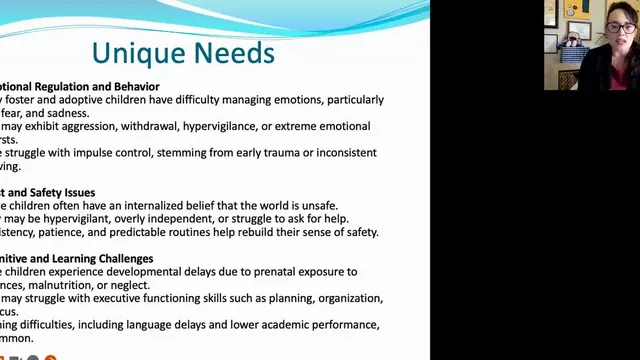
8:36So why behavior is a form of communication of an unmet need? The traditional thought and here at LEAF Wraparound, Revive and Love Pathways, we come from a love-based approach. We do not teach traditional parenting. It does not work with these children. So the traditional parenting thought is they're choosing to behave this way. They're not that smart. They don't have that emotional intelligence. It's compromised. So I want you to reframe, put on a different lens. When you see your child differently, you will see a different child. And that's the paradigm shift here. The trauma responsive trauma lens, their behavior is telling me something. They don't yet have the words yet to say. Children who have experienced early trauma often communicate through behavior because the parts
9:36of the brain responsible for language, reasoning and self-reflection become less accessible when they are stressed. So their behavior may be saying, I don't feel safe like I can trust you yet. So I'm going to lie, put up that wall, not tell you the truth. I'm overwhelmed. So I'm going to look like I'm ignoring you to help myself cope with what is happening in my body. I'm afraid you'll leave me. So I'm going to cling because I've had people leave. And if you are a parenting child who's been in multiple placements like I was, it is going to take time to trust. And they're going to protest for your attention because they need your attention. They need it. I don't know how to calm myself. So I'm going to run all over the place to get your attention to help me learn how to calm. Children borrow a parent's
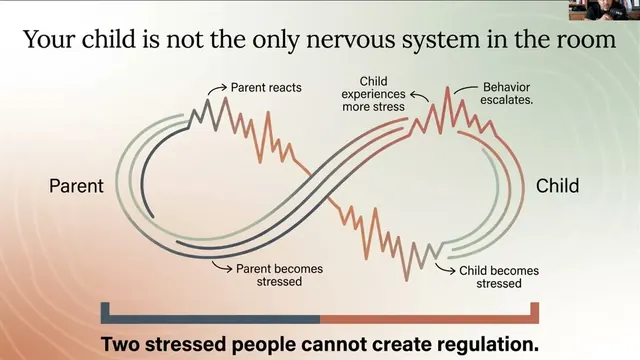
10:39calm. And it's through your modeling and through your regulation of your nervous system that they have that download. There's an environment of regulation. I need connection. So I'm going to protest, hit, kick and yell until I get it. So it's the parent recognizing, what's more important right now? My phone call or meeting the need of my child because they need my attention. And I'm going to get on their level and meet that need. It's so crucial. And when that child feels that sense of scaffolding, safety, meeting the need, guess what? The behavior will lessen in its intensity, frequency and duration. So it's worth the investment. So how do I stop the behavior? Right? This is always a parent's question.
11:36We can't stop anything. If I tell you right now, don't think about a white bear. Go. Don't think about a white bear. Stop thinking of that white bear. You can't turn off the brain. And traditional methods of changing undesirable behavior only look at the surface. For children with trauma histories, the goal is to look beneath the surface of the behaviors to see what is the cause of the challenging behavior. And this is where parents get confused because they're only looking at the surface. And so what's beneath the behavior for children who've experienced trauma? There's shame, a lot of shame. Kids don't want to talk about being in foster care. Kids are, it's hard to explain to another child why you don't look like your parent. Think of all the things every day they're reminded of their loss, especially in transracial adoptive families.
12:35They're reminded every day they're different and they don't belong constant need. So there's shame. There's loss. Adoption is formed through loss, loss for the birth mother, possible loss for an adoptive parent due to infertility loss, loss in foster care, loss of multiple caregivers. There's grief, which is a result of that loss. I cried buckets, buckets. And I tell that to kids and kids, I've cried buckets. There's so much grief and we need to be able to lean into the grief. There's loneliness. Who understands what I'm going through? I feel alone. And one of my favorite phrases is what's shareable becomes more bearable. Just because your child is not talking about these feelings beneath the behavior doesn't mean they're not actively feeling them, thinking
13:37them, and they need a therapist. And we provide clinicians at LEAF Wraparound. There also can be sensory overload. Think of the spinny wheel on a computer. They're filtering through the senses, sounds, tastes, smells, sight. The lighting, even in a room, can be overstimulating, which dysregulates the nervous system. And so there are five unmet needs. This comes from nonviolent parenting. And they're the five A's. And I encourage all parents to memorize them. The needs are your child may need affection. They may need more affection, more touch. Touch lights up the whole brain. They may need attention. And that's just listening. Just listening. Excuse me. Excuse me. Not fixing, not talking them out of their feelings.
14:33And the biggest pet peeve, not giving unsolicited advice. Just holding the feelings is therapeutic and loving autonomy. Some kids need more alone time. Some kids need more downtime to reflect. Slow down that spinny wheel. Kids need acknowledgement. I see you. I get you. You're really angry today. You're really sad. The acknowledgement they exist. Because remember, there's a part of them that feels abandoned. And that part of them also feels like I don't exist. And the good stuff. The good stuff. And as much as you can find, thank you for throwing your plate away. I appreciate you, right? Fist bumps, taps, acknowledging the good stuff. They need a lot of that because it goes in one ear and goes out a shoe. They need to hear it again
15:28over and over and over all that good stuff. So that's that download in your nervous system.
15:34Next slide. So my child is not the enemy. You know what's the enemy? It's the trauma you're dealing with. The residuals. That's what you're getting. And it's hard. And I know parents get compassion fatigued. I have so much empathy for you, each one of you. So together, we are working against the effects of trauma, not against each other. And a child's doing that within themselves. They're also trying to manage this enemy within. So have compassion. They're working really hard every day. So some of my favorite phrases are confused kids are going to do confusing things. One day I cut all my hair off. That's behavior. It was my way of regulating my nervous system. And it scared my parents. And they were doing traditional parenting. They thought I
16:34was doing this on purpose. And guess what? They punished me. They punished me. They shamed me. They made me go to school with my cut off hair. It was so hurtful. I was confused. I didn't know what else to do with my feelings. Scared kids are going to do scary things. Sad kids are going to do sad things. They're going to cry a lot because they're sad. Because they're trying to release the grief and the loss. So a parent's job is to see the feeling beneath the behavior. And if you're having a hard time, it's okay to talk to somebody about that. It's okay to go to therapy and say, you know what? Every time my child cries, I have really big emotions. And it's hard for me to have empathy for my child's pain. Because maybe looking back at my
17:29family of origin, who was there to have empathy for my pain? So there could be a younger self within yourself that still needs that love and attention and has unmet needs. So the more you work on your own unmet needs, the deeper you can go within your child to help them with their unmet needs. It's worth the investment. So this is actually one of the therapists here said this in supervision. They aren't giving you a hard time. They're having a hard time. They're having a hard time. Behavior often feels personal. Parents take it personally. They feel rejected. One of my favorite phrases, it's not a rejection of you. It's a reflection of what they're going through. Instead of thinking he's trying to ruin the party or tonight, he's ruining our picnic. Try
18:24asking, is he overwhelmed? I'm going to think about that iceberg right now. Is she scared? Is this reminding them of something painful? Is their nervous system overloaded? Children cannot borrow your calm unless you keep it. Your regulation becomes their co-regulation. Remember, behavior is information of an unmet need, not a personal attack. It's not about you. It's about what they're going through. And it's complicated. It's complex. You may not know how to parent in the moment and that's okay. Sit with it, wonder about it, wait with it, name it to tame
19:07it and explore it. So 10 empathy statements to reconnect with your child. And this is something you can practice. Read it out loud. If you can, I would love for you to read it out loud with me. Number one, this behavior is telling me a story I haven't heard yet. Something my father said when I was adopted. He said, when you came to us, you had a whole life we knew nothing about. So instead of asking, why are they doing this? Stop. Ask, what is this behavior trying to communicate? Number two, if my child had the skills to do better, they would. Children generally do well when they can. Challenging behaviors often reflect lagging skills, fear, dysregulation, not a lack of desire to succeed. They desperately want your approval
20:03because of that part of them that has compromised self-esteem. They're always seeking your approval. That's why they need more attention to the good stuff. Three, my child isn't giving me a hard time. They're having a hard time. Behavior is the outward expression of an out-of-sync nervous system. Four, this isn't about me. This is about what happened to them. Many reactions are rooted in past trauma, projected and tested on you. Five, my calm can become their calm. My calm, a regulated adult helps regulate a dysregulated child. Your nervous system is one of the greatest therapeutic tools you have. The more you stay calm, the more that download, oh, we can stay calm together here, teaches them. Six, behind every challenging behavior
21:01is a child asking, am I safe here? Do I need to push and pull and put up a wall? The question isn't always spoken, but it is often what the child is asking. Seven, they're not trying to control me. They're trying to feel in control of their own nervous system. Children who've experienced chaos often seek control because they often had none. So they're going to, it's an external attempt to feel an internal sense of control. Eight, connection opens the door to that correction, the teaching, the discipline, but you must have that safety and connection first. That's the influence. If you don't, you're not going to be able to teach. Children are more able to learn and accept limits when they first feel seen, safe and understood. Nine, I can hold both compassion and boundaries at the same time.
22:02I can understand my child's pain and still provide structure and safety. And structure is the key to creating safety. A consistent daily schedule, front loading, telling a child what's going to happen so they know what to expect helps calm that nervous system. Ten, healing happens one safe moment at a time. No single interaction changes everything. It's a process and a lot of families aren't going to like this, but this is the truth. Healing from early separation trauma takes a lifetime. It's a lifelong process. You're not going to do it in 18 years. You're not, then you need to embrace and accept that, but you are here to instill and plant all of these seeds because they will take you with them their whole lives. So every calm, consistent, connected
22:59response strengthens that trust and helps reshape the child's expectations of all relationships and all their future relationships because you are the most important relationship. So unconditional love isn't giving in and that that's the paradigm shift. You're not enabling. Many parents worry. If I'm loving when they're misbehaving, aren't I rewarding it? The answer is no. Unconditional love says, I will always love you no matter what boundaries say. I won't let you hurt yourself, me or others. Both can happen simultaneously. I love you and I won't let you hit. Hitting is not okay. I know you're angry, that validation and I'm staying with you until your body feels safe, that co-regulation. I understand this is hard, the acknowledgement,
23:58and we can wait patiently until we get what we want, that modeling. We can do this. We got this. Children heal from the experience, both connection and structure. That was great,
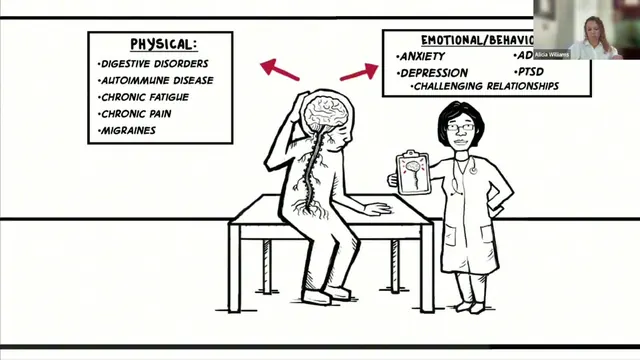
24:13Jeanette. Thank you. Thank you so much. I can't see a lot of folks on the screen, but I can see you and I just appreciate all of your head nods and that you're reading along as Jeanette asked. So just appreciate you being here and diving in. So yeah, so I'll pick up now where Jeanette left off just about our nervous system, which is where we start in neuroception, which is our body safety detector. So when a young person is walking into a space without their brain being online, their spidey senses are telling them whether they're safe, if someone's frowning at them, if someone's smiling at them, which starts their whole perception of what that experience is going to be like, which then sets their nervous system state. So then they're going to start having sensation, which are the cues that your body gives you about how you're feeling, and then you move into your feelings. So those are the names that we're giving to what we're experiencing. And then the behavior is what
25:12other people see us doing. And then the story that we tell ourselves based on all of those things happening simultaneously with all of our experiences. So I have to admit, as a parent, these are my four humans, and maybe it was different for all of you, but parenting didn't come with a handbook for me. I'd be happy to know if someone else got that handbook and how it maybe changed your parenting, but for me it didn't happen. And I can look back now and reflect and know that I was a different parent at 20 than I was at 32. And my children often remind me of that. And that came from, you know, just learning and being educated and trial and error and being committed to being a lifelong learner and being able to know that as the adult, I also make mistakes and I can continue to try. So that's our emotional range.
26:07And then we'll talk about that a little bit today about the eight emotional capacities that can transform your parenting. So this is, can you feel what your child is feeling and not be driven by it? Can you not be sucked into that storm if they are having big emotions? So for capacity, number one, it's, can you have space for big emotions? So can you recognize when those big emotions are coming up in yourself? So we're going to kind of change down from looking at our young people, our child, and kind of think about how we show up in these spaces. So can you sit with your child's big emotions without being sucked in? Your child's biggest emotions require your biggest calm, like Jeanette was mentioning. And number two, can you accept it's, is accepting what is, can you be courageous? Can you stop arguing against reality? Because you will lose 100% of the time. And can you stop wasting energy on what is and use that
27:05energy for what could be? So can you teach and learn without having to fix all of your young person's problems? And number three, can you feel without reacting? So every feeling is acceptable, but not every behavior is. And this is the power of the pause. This is our superpower as the adult, right? If we can stay calm. And there are so many times that I, you know, I've lost it and then immediately regretted it. And then once I realized that and could go back and fix that, I start to realize like the more time that I can pause without responding is where my better self shows up. And number four, recovery after disconnection. So there isn't this perfect parent like I mentioned, because they don't exist. And it's not about failing, but it's repair after the rupture. And Jeanette talked about this a little bit like our young people don't always have the emotional capacity to repair, but we do. And sometimes taking that pause
28:05and then going back and saying like, Hey, I overreacted when this happened. And I'm sorry, let's try again, because that your relationship is stronger than any difficult moment that you'll have with your young person. And number five, can you set limits with connection? One of my favorite things that I would say to my students when I was still in the classroom was your job is to stay safe, but my job is to keep you safe. And can you state that limit without lecturing? Because young people, they'll tune us out anyway, after a few words. And can you offer that compassion with firmness and without getting dysregulated yourself? And can you hold that boundary firmly? I have this picture of my puppy on here, because he was in training. And I realized with my older dog who passed away earlier this year, that one of my regrets was that I didn't get him trained. And so I didn't get to enjoy him as much going out, because he was often pulling me on this leash. And I was also, you know, pushing pool with him
29:04just to get him to listen so I could take him on this walk. And I realized with my new puppy that it was important for me to get him trained to set those limits. Because now I get to enjoy him more, he can go everywhere that I go. And he's a calm, lovely puppy to have now. So it's kind of the same thing with our young people want us to give them those boundaries and set those limits with them without us feeling guilty and then swaying on what our boundaries are. And can you trust the process? So progress isn't always visible, right? It's like getting on an airplane knowing that you're going to the beach. But you don't get mad when you're on the airplane saying like, oh, what if the beach isn't there, right? You have to trust that it will be there once your plane lands. It's the ultimate long game for us. And when we're working with our young people, it doesn't always feel like it, but it does get better.
30:00And we have to continue like Jeanette said to keep showing up and trying again and again. And it is surprisingly delayed, but it does happen. And growth happens in those unforeseen
30:12spaces. And number seven, can we stay curious instead of judgmental? I love this photo because it was when I was working at a high school and the adults would often get upset with the young people who would come in and be on this chaise and like napping and this one particular child and it was the principal who would often say like, he's not allowed to come in here and nap. He needs to go back to class. And I would always say, what's the antecedent to that? There's something else happening in this young man's life, right? There's a reason he comes into this room every day around 12 o'clock and crashes. And so I would spend a lot of time trying to get to know what these young people's behaviors were trying to tell us instead of just judging them. And this young man in the red shoes used to wake up every morning at 4:30. He was his mom's only child and he would get up and go to work with her in clean houses at 4:30 in the morning.
31:07So naturally at 12:15, he's ready to take a nap. So and then thinking about like instead, if we stay curious and stay out of judgment, right, then we can ask what's underneath the behavior? Does my child feel safe? What happened before this? And is my child or this young person still developing a skill? And number eight, connect when we want to correct. You don't have to defend yourself when you feel safe. And oftentimes, like Jeanette also mentioned, right, if our young people have experienced trauma and they're not feeling safe, right, they're usually defending themselves. And for us, if we can change our physical location, when we're feeling dysregulated, that will oftentimes change how we're showing up. So even just taking that pause, going outside, going for a walk, looking out a window, all those things connecting with nature will help us as well. And then also just again being curious and wondering how is this
32:05making sense for them? So I'll go over the eight capacities that we just went over. So number one is holding space for those big emotions. And just really quickly, all of these are skills that we have to practice. I wouldn't say that you should go home and practice and do them all, but maybe pick one of them. So the first one, hold space for big emotions. Can you stay present and grounded when your emotions are intense without rushing to fix or stop them? Number two, can you accept and acknowledge the current reality without resistance, even when it's hard? Number three, can you feel without reacting and allow your emotions to move throughout without immediately responding or escalating? Number four, can you repair after disconnection? Can you focus on the reconnection and rebuilding trust after conflict? Number five, can you set limits with connection? Can you hold those clear boundaries while maintaining warmth and your relationship? And number six, can you trust the process,
33:03recognizing that growth and healing take time and are not always linear? Number seven, can you be curious instead of judgmental? Can you seek to understand the why behind the behavior rather than labeling it? And then number eight, connection over correction. Can you prioritize the relationship before discipline or redirection? So again, I would encourage you to maybe pick one of them and practice it to build that skill. And then I always like to share this five, four, three, two, one mindset shifting technique, which is when you're feeling really dysregulated as the adult and in this situation, right? What are five things that you're grateful for? What are four things that you like about yourself? What are three things that you're looking forward to? And two things that bring you joy? And one positive thing that you're going to put out in the universe today. And as we get closer to closing now, I really love this video. And I'll play it twice just in case you miss it because it's a little
33:59quiet. But this is a mom who says good morning to her nonverbal child every single day. And this is when her camera captures when he finally speaks back to her. We'll play it one more time. So in those days when it feels hard, we have to just keep trying. No, I'm sorry, I can't get it to stop. Probably have to get out of here to do it. Sorry about that. Yeah, here we go. And so here, if you have any questions or comments, Jeanette and I are here to chat with you a bit. Or if you'd like to get in contact, you can reach out at leafwraparound.com
34:56and then we'll have one last slide as well for you all. I'll stop sharing now.
35:03So someone had a question in the chat. Thank you, Alicia. Thank you. I can't, I couldn't see the chat while I was talking. What does connection over correction look like? Yeah. Oh, that's a great question. So your, your connection with your, and there's that last slide for you all to. So if let's say there's a behavior that you do need to correct, right, like instead of jumping straight to why did you do this, it could start with something like I love you and I know that you really wanted to show me this or do this and then just talk through it first. So making that connection to something positive before going to the, to the negative thing, even though that negative thing might need correction, you want to start with something positive with some type of connection. Thanks for that question. Yes, I'd like to add. So I have a lot of interventions that I do with children in foster care and adoption and one of them is called the shame-wich.
36:01And so the shame-wich is think of a sandwich metaphor, think of a sandwich, the bread on the bottom is your point, pointing out all the good stuff. I love you. I see how hard you're working, you're putting a lot of effort in. And then the turkey, the lettuce, the pickle, the tomato, all the stuff that you want to bring to their attention. That's the correction, right? And we here in our home, we don't kick dogs. We value our pets. We don't kick dogs. You put all the emphasis on the behavior, not the child. You're connecting with the good stuff, the strengths, their vulnerabilities. And then the bread on top, you sandwich that in. And we love you. And we're going to figure this out. We're going to figure out how to take care of the dogs and give them love and empathy, because all living things need love and
37:02empathy. So there's so many levels to parenting. And I'm a parent myself, just values and instilling values in your child. So that's the shame-wich because it eliminates a child from feeling criticized. A lot of these kids who live in pervasive shame are very hard on themselves. They have a hard time being corrected. If someone points out something wrong, they actually believe they're all wrong. And you can, as I'm talking, you can really think about your child. Yeah, they just can't receive criticism because they're living in shame, because they can't separate themselves from their behavior. It's all enmeshed in one. They can't receive it yet. So that's the shame-wich. So connecting. I love you. We love you. Pointing out the good stuff. And
38:00lettuce, pickle, tomato, turkey. And this is what we need to work on this, right? Because it's part of growing up. And we love you. And we got this. And we'll figure this out. So modeling, persistence, not giving up that investment. And it's worth it. It's worth it. Also, it's also called the compliment sandwich is how I hear it often working with other adults, right? Yes. Yeah, separating the person from the problem. Right. There's a question for you,
38:34Jeanette. It says, how does a love based adoptive parent help other traditional parenting relatives and families like culturally punishment parenting has been the long standing foundation? Can I read that need to how does a loved based adoptive parent help other traditional parenting relatives and friends? I see. I think it comes down to the research and helping them understand that traditional parenting actually causes more mental health issues. And if you really think about it, it does. It causes anxiety disorders, spanking, yelling is only going to dysregulate that nervous system. Any physical harm, timeouts do not help children. It actually causes more confusion to be left in
39:34my room. And then they're wondering, what am I doing here? And now I'm alone in my feelings. Wow, my parent really can't handle my feelings. Wow, they're telling me they can't handle my feelings. Well, how am I going to handle my feelings? I guess I'm just going to sit here. But who's helping me with my feelings doing that time-in parenting? Actually, this work as an attachment therapist, the investment actually in love based approach develops more higher self esteem, higher confidence, higher competence, emotional intelligence. It's so worth it. Do you want to pay for more therapy or less therapy? Okay, so that would be my answer in a nutshell. I think bringing it down to mental health is important because I got my
40:32mouth washed out with soap. I mean, I got the spatula, I got the spoon, I got all of it as a kid. And it didn't help me one bit. And I'll be honest, I tried to end my life when I was 13. Think about it. I'm helpless. I'm hopeless. My parent can't even help me. So it makes me feel more helpless. Kids do what they can. They can't. These kids, it's not that they won't.
40:57They can't yet without your time-in parenting. Another question. Yes, how are you? So glad you're here. When dealing with two overwhelmed parents and four very high needs kids, how do you create more space for connection with individual children? So one of Bryan Post's interventions is 10-20-10. And so 10 minutes in the morning of focusing on one child at a time. Now that's four kids. That's 40 minutes in the morning. It's being mindful and recognizing, well, maybe it's five minutes with each of your children, where you give a long time, which is that download of connection, because they're not hungry for you. They're starving.
41:52And your children need a lot of individualized attention. So just giving them five minutes. And if you can have somebody there in the morning, like your family specialist, possibly, who's part of your wraparound team, to be there, to be with the other three children, so that you can one by one give them that individualized attention. Five minutes in the morning, the 20 minutes in the afternoon, but you can make it five or 10 minutes because you have four children. It's the investment and the scaffolding. I'm with you. I'm co-regulating with you. We're here together. We got this. What are you excited for today? And listen, with trauma, it's very hard to stay regulated. And I've been doing this work a long time. I'm always asking myself, why? What is inspiring me to do this investment in this child and this parent? You've
42:50got to inspire yourself and go, you know what? I'm going to do this. I'm going to do that five minute. I'm going to make sure someone else can watch the children so I can give them this download in the morning, after school, and before bed. So that's the 10, 20, 10. It's creating that structure. Having four children is a lot. And two parents really need to be a team together and create this structure for your family. Because if you don't, then the outcome, and Bryan always says this, if we keep doing the same thing and expecting a different result, that's insanity. You've got to try something new. And it takes 30 days to change a paradigm. So doing that daily investment and trusting the process, not looking at outcomes, trusting
43:46the process. I'm going to begin to do this tomorrow. So that would be my answer for you, and I hope that was helped. That was a great answer, Jeanette. And I see another question,
43:56and I'll read it. It says, I've had the pleasure of increasing how I display love to my babies, but disconnected from family and strong religious views. They are still hurting from the tough love they experienced. How do I further help my children heal from rejection or traditional parenting experiences they had from dealing with family and others? That's a tough one for me. Especially the religious views, because I had my own thing with some close friends this weekend around that. So I think when you continue to show up for your children, that's how you help them. And how can you protect them from those folks who maybe are being harmful to your babies? If they are not healthy, stop having them around. You keep showing up for them. You keep being the positive influence and create those other relationships with other people who are going to spill into your kids and pour into your kids
44:55in that way as well. Yes. So to add to that, I think we need to be detectives, especially with children who have trauma histories that we don't know much about. Find out what they're afraid of. What are they afraid you're going to do? And then bridge that and reassure them over and over. We do not hit in this family. You are safe here. We talk through things. Find out what they're afraid of and reassure them that that's not going to happen. And say it till you're blue in the face, because again, they need to hear it over and over until they actually download it and actually feel a sense of safety in their body and go, I can finally relax, because that's not going to happen in this home. Thank you for telling me
45:50a thousand times, because that's what I needed to know. Just like we learn language, we need to hear it over and over and over until we are able to say it and affirm it. So I would do that. Yeah. I'm seeing some comments about seeing non-adoptive families whose kids are starving for their parents. And then I see another comment that they see it all the time on school campuses and in everyday situations. Parents on phones busy doing tasks, not giving children, they're five minutes to regulate and connect. Yeah, that's hard. I think what's interesting about the times that we are living in is that people are so connected to their phones, right? Like they're filling their buckets with things that are not really filling their buckets with things and they're distracted a lot. And so I remember even seeing a woman who was on
46:48Facebook and her baby had drowned because she was just on her phone so much. And I think we don't realize how connected we are to these devices now and now we're starting to see the consequences of them, right? So how do we make other people stay off of their phones and pay attention to their kids? We can't really make them, right? But I noticed even for myself with my family, if we're at dinner, for example, and I see my husband on his phone and my son on his phone, I will refuse to get on my device, but we'll just wait for them or I'll breathe hard so they know that I'm getting irritated by them being on their device. But it's just not a healthy way to interact anymore. And it's just kind of taken over. So trying to read through some of these.
47:30It's hard. It's a balance. So I'll read this one. How do you give your kid what they need when their needs directly conflict with yours? For example, 11 year old male wants to sleep with single mom. Mom wants good, uninterrupted sleep. Or a kid doesn't want to go to school ever, wants to spend all day with mom, but doesn't want formal structured learning. Not everything can be learned via play. When I read this, the first thing I thought about was Bruce Perry, who's leader in childhood trauma, who I had the privilege to interview. And he talks a lot about parallel play and taking days off. And I know we all get to work. We all get to work. But there may be times when your child needs that mental health day. And they just need a full day.
48:30And I think you need to think about that. Maybe it is twice a month, you stop everything and you do that time-in. We're going to have mom day today, or we're going to have your day today. You get to make all the choices. Of course, there's limits in there. But giving them a sense of control and letting them and feeding that part of them that is so starving for you. They just need to know you're there. And so that time-in is so important. So I think for you, it's finding times throughout the week when you can feed that part of him and say, hey, it's almost like prescribing the symptom, which is a type of therapy. When they don't want to sleep, go, hey, let's go rest on the couch right now. Or let's, let's go today. Guess what?
49:29Guess what I've decided? One day a month, we're going to have a mental health day together. We're going to get to not go to school and we're going to get to do things together all day. That's going to feed that part because you're acknowledging there's a need here. That's just an idea. You can try it and see if it works because a lot of parenting, too, is trial and error. Like Alicia said, we don't have a parenting book. There's so many parenting books. And not everything works for every child. Every child is different. And they need a different recipe of interventions and parallel play and being with and time-in and you're finding that, like a recipe, the balance of spice, this spice, this ingredient, it takes time to get to
50:19know your child. So that's what I would recommend trying. Let's see the next comment. The mom of one of my son's friends keeps telling me and my partner that you allow your kids to behave badly. She says, you are the boss and you have to be firm and make them do what they must do. This happens often being never told again and again that they are not doing well. I feel angry about this. Rightfully so. I think there's that, again, it's back to that balance. Our young people are looking for some boundaries to things, but that doesn't mean we have to be mean or unkind to them to instill those boundaries. Again, back to my slide that I said I'd love to say to my students, your job is to stay safe. My job is to keep you safe. And then firmly stating what those boundaries look like for them. Didn't mean that I didn't love them or didn't want to be around them, right? But I needed them to be well and doing
51:19so was doing that. And I think, again, back to my earlier comment, when you have people around you who aren't being positive or helping you, those are some of the people that would probably not be around very much. Let's see, trying to get, it moves the notes. How do you get your 17 year old biological child to recognize more of the trauma causing behavior, first taking it personal with the adoptive child who is rude and disrespectful? I just love the phrase, he's not giving you a hard time. He's having a hard time in his own body because of what happened to him. And his behavior is a reflection of what's happening. And it's a push and pull. What we say to other people, this is mental health, we're actually saying to ourselves. So it's not about you. And I know it's hard having siblings
52:15with challenges. Don't take it personal. It's not a, and my phrase, it's not a rejection of you. It's a reflection of what they're going through. And that my own sibling is going to need a lot of empathy and compassion too. Yeah. I like your comment, you said a day in nature with no fine, with no phones, I find really helps my connection with my kids. I think 100%. And I think more of us need to do that. Like, I don't know how we existed, right? We used to actually have to look at a map to figure out where we're going. Everything now is just on the phone. And I think we're so distracted by them. And yeah, I think sometimes that would be my first recommendation to parents is like, just leave it, leave it alone for a little bit and see what happens with your connection. Yeah. Go outside. I see your comment,
53:01I'm overwhelmed with getting my 14 year old son to do his chores and be respectful. How can I connect with my son instead of treating it as miscommunication or lack of understanding? He always has an excuse instead of being responsible. I would probably connect that back to something that he does enjoy. What does he like? Right? And then you create your boundary like if you have these chores, as soon as you get them done, then we can have this or then you get to do this. Do you have anything else for that one, Jeanette? Yes, I agree. I think that, well, something in love-based parenting is as a parent recognizing the emotional and psychological age of your child. Because children, especially when they're stressed, they regress. Okay. And so if your child is 14, just step back and be an owl. Observe,
53:58watch and listen and go, huh, what age do I see them really emotionally? Because they may not be 14 and teenagers have a lot going on in their brains. There's a lot of overwhelm. They get more easily overwhelmed. They feel very awkward. They feel incompetent. They don't, some kids, and I don't know if your child has adopted this 14-year-old or was in foster care or had early neglect or abuse, they didn't learn skills. I had a youth who was in foster care, who was homeless, lived in a car. Then when he was placed in a foster placement to adoption, they expected him to just clean his room and he couldn't do it because he didn't know how to clean a room. And he was so ashamed to tell his parents that he didn't know how to clean a room because
54:53he never had a room. So that's, it's us really stepping back and going, huh, what is going on here? What is happening for my child? And being curious and you can tell my tone of voice, being really curious and being that calm, soothing, huh, noticing that, because when you're curious, your voice actually has this tone. I'm wondering. I see it's really hard to do chores and I'm wondering or I'm thinking, maybe there are some chores that you don't know how to do yet and I'm happy to do time-in parenting and teach you that skill without shaming, without blaming, without forcing, coercing and helping them. We place and project adult characteristics on kids all the time. We expect them to be 25 and you should be doing this and doing that.
55:50Some kids just don't have that capacity yet. And the more you do the time-in and the teaching and the downloading, eventually they're going to go, Mom, stop. Let me clean my room. Okay. I mean, they just and you realize, wow, I've done my job and then you know what happens for parents? Well, I miss helping clean this room. I wish you would let me still help clean this room. So it's a privilege. And I think too, we think of chores like, Hey, we've got these, you know, your list of things that you need to get done. But I again, to your point in that, like that can be very overwhelming depending on the age of the child and right. So maybe scaffolding down to like, I just need you to put your books in this box or put your shoes in this, you know, kind of break down the task. Yes. Because just hearing chores for a young person can just
56:45be really overwhelming. And they don't know where to start. That's right. Especially if they have a diagnosis of ADHD, someone said, let's tackle this chore together. Yeah. Let's do it together that time-in because listen, 18 years goes by like that. Yes, the best. Yes, he's adopted the age difference. Yes. See what age he is emotionally and psychologically for sure. Because a six year old can't just clean their room all by themselves. They need you to come in and label things. And this is where we put our shoes. This is what we do here without shaming, without condescending, knowing and being mindful. And a lot of praise when they get it right. That's a lot of praise. I think do we have more question? Yeah, it says I have the
57:42opposite my adopted daughter runs to mommy when being held accountable or giving a chore to do. This is the same thing with homework or any other chore but then mom is overwhelmed with work and attempting to keep keep up with her own issues. I tend to stand back since I feel like I have no authority or say or say so but then it feels like I'm watching them both operate from exhaustion or being checked out. Yeah, that's hard. I think maybe again this is an area where you can break it down. Smaller chunks of things that your daughter can do and some timeout breaks for mom too. What fills her bucket? What brings her joy and can she have a few minutes before having to respond? Can she have a moment to regulate herself? Thanks. That's
58:28very kind of you to say. Thank you so much for being here. I hope you learned a lot in getting some new information and I saw someone's comment about a webinar on different facets of rejection so maybe that's something that we can put on our radar to get for you. You're welcome. Thanks for being here. Okay. Oh, you're welcome. Thanks for being here, everyone. Thank you so much. Yes, you will receive the recording. Yes. Very welcome. Take good care. Good care. Practice. Stay inspired. You got this. Keep on going every day. Never give up. Yep, schools need a lot of education. Doing it here in Los Angeles. I do have a column on Psychology Today called the Inner Life of Foster Care. I highly recommend you go to that
59:24column. There are many articles on there and one of them is about school, helping kids in school, helping kids with shame, grief loss. There are seven core vulnerabilities in adoption that you need to be aware of. So educate, educate, educate. All right. Thank you so much. I think that's it for today. We'll see you at the next one. Stay connected. Love is the only way to fill in the gaps to catch them up. Bruce Perry is working on this too. It's very challenging because every school district does different approaches. Thank you. All right. Well, I'm going to say bye for now because all of our wraparound families keep everyone stable. Okay. So take care. I'm going to say bye for now. Bye, everyone.