media loading
Conference recordingTrauma & healing
You Gave Them Love: So Why Does Adoption Parenting Still Feel So Hard?
You love your child deeply. You've sacrificed, learned, advocated, and shown up again and again. Yet many parents still face intense behaviors, emotional outbursts, rejection, anxiety, and conflict. Bryan Post helps you understand your child's behavior and your own parenting journey, and shows how connection-based strategies create lasting healing and trust.
Presenter: Bryan PostRecorded Nov 202664 minEnglish · Captions (CC)
What you'll learn
- Parenting, adoption and trauma are emotional, not cognitive. “A tool and a technique without an understanding of why you're using it” will leave you feeling just as lost: “You are the expert.”
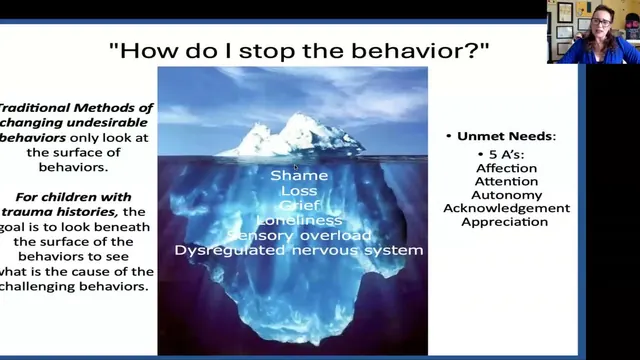
- “If you're acting out, it's because you're stressed out.” And when we stress, we regress: a stressed child acts from their emotional age, not their chronological age, and so do parents.
- When we are stressed, “our thinking becomes confused and distorted and our short-term memory is suppressed” (Joseph LeDoux), so a stressed child cannot learn. More punishment only adds stress and costs the relationship, and “as long as you have relationship you have the ability to influence.”
- Emotional reactivity stems from unfinished business. When you get upset, stop, take 3 to 10 deep breaths, ask “How am I feeling?” and then “When have I felt this way before?”
- Reflect, relate, regulate: reflect on how you are feeling, relate by naming it (“I'm feeling scared, sad, angry, upset. How are you feeling?”), and regulation follows.
- When you mess up, repair: “I'm sorry. I want to be such a good parent to you, but I messed up and I'm gonna do better next time.” That models what being responsible really means.
Transcript Show full transcript +
0:00Well good morning everyone. Good morning Zoom. Got about 80 folks join us on Zoom today. Thank you all for coming out and bearing the elements. That's very windy on the drive out. So we have two and a half hours together which means I have to do I have to download 28 years of experience into you in two and a half hours. We can do it. We can do it. This time is for you all. So as I'm going to talk for a little bit and then I want to go into questions. I want to go into Q0:47and A because that's what's going to be most valuable for you all during this during this short period of time. So be thinking about questions you have challenges you have anything you you want to talk about. I'm completely open to talk about. So don't be shy. This is National Adoption Month. So a round of applause for all our adoptive parents. Such a beautiful challenging experience. The journey of adoption. I think that title of this talk is you gave them love right. Everyone starts off feeling fantastic and excited and having1:33all the butterflies and usually doesn't take long before all those butterflies fly away and you're left with the challenges of relationship. The challenges of relationship and something I learned a long time ago about this work that's really important is that most of you have a book I've written 22 books. If you didn't get a book make sure you get a copy of a book. There's a couple of extra books back there as well. A book like a talk is cognitive. So you're thinking and you're processing and you're trying to make sense of things sometimes rationalizing and justifying and defending.2:22We do that too cognitively. But what no one tells you is that parenting and relationship and trauma and adoption and foster care are all emotional. So think about that for a moment. We spend so much time talking and learning and reading and writing cognitively. But the real existence of the experience is actually emotional. And that's why you have grand ideas about adopting this beautiful child and providing a home and providing love and you go to the foster care classes and3:11you learn all the things you're supposed to learn and hear all the things you're supposed to hear. And then as soon as you get home with this little bundle of stress all that goes out the window. And then you're left feeling like you don't know enough. You're left feeling like you didn't learn enough. You didn't hear enough. Hey buddy. Good to see you man. That you didn't hear enough that something's missing. And so then you you take that you take that insecurity if I will that insecurity and you start going to professionals looking to find that missing thing and you go from one professional to another professional to4:01another professional to another professional to another professional to another professional. And the awesome part about that is that you didn't give up. You just kept looking. You just kept studying. You just kept reading. You just didn't give up. You just kept going. But then what happens at the end of the all the lines of professionals you come back home and you're still there with the same thing you started with. And the reason is because this is not a cognitive journey. This is an emotional journey and all of the answers don't lie outside of you. They lie inside of4:48you. The real challenge the real struggle is the struggle in your heart in your heart and in your child's heart and the interaction between the two. That's the real struggle. And so looking for the answers the support is fine. It's great to have support. But you are the master of your family. You are the master of your child. You're the master of your life. You're the master of your home. No one knows more about your situation than you do. You are the expert. You don't need more answers. You don't need more formulas. You don't need more tools and techniques. And people love to give tools and techniques. But a tool and a technique without5:35an understanding of why you're using it or why you're doing it is going to leave you feeling just as lost. When you practice a tool or technique, it's not the tool or technique that makes the difference. It's you. It's how you show up. It's how you apply it. It's how you utilize it. It's your understanding of what you're doing. And if you don't have the understanding, then you'll continue to feel confused and then you try to read the next book. My whole life's work has been about helping parents to understand differently, to understand first6:22themselves and then from their self-understanding to understand their child. Because to understand someone else without having an understanding within yourself is going to leave a gap. It's going to leave a gap because everything we do is a reflection. So if I'm trying to understand someone else and I don't understand myself, guess what? I can't really understand. I can't truly understand because we're just mirroring one another back. We have what's called mirror neurons. Mirror neurons. Whatever you see is a reflection7:07from something outside of you. And we learn, this is one of the ways our brains learn through these mirror neurons. And that always brings me back to my childhood experience and the foundation of who I am. And specifically with my sister. See, my sister, she was a year younger than me. We both adopted his infants. But she had a vastly different in utero experience than I did. And see, we don't even talk about the in utero experience enough. We don't even talk about the fact that by the fourth week after conception7:52you're already beginning the ability to hear. By the second trimester you're already thinking. So whatever is going on in the womb is getting stored in your brain. Nadine Burke Harris, who's the author of The Deepest Well, I think that's the name. Yeah? She says, in the first year of life, we develop, we're developing one million neural connections per second. One million per second in the first year of life. And that starts from conception. From conception, everything that is experienced8:39outside of you gets stored inside of you. By the time you were born, you have already lived a lifetime. Now, all of that's called preverbal memories. Those are all called preverbal memories. Memories before you have any consciousness. So you don't remember those. But those memories are stored in your brain as vibrations. See, a preverbal memory is just a vibration. Every experience is just a vibration. So then because you don't have words for it, when it gets triggered, you can't make sense of it because it's just an emotional vibration. See, an emotion, the definition of emotion is energy9:26in motion. That's the definition of emotion, energy in motion. So when you're feeling emotional, what that just means is you have an awake vibratory system. Your system is alive. It's electric. And so from in utero, you're storing these experiences. Now, when I met my biological mother at the age of 37, one of the first things she said to me is, I loved being pregnant. I loved being pregnant. But she had, she was married. She had three kids. She got pregnant with me out of wedlock. She couldn't keep me. I was supposed to have been aborted. When I found my mother at 37,10:13the only people that knew I existed were her and her older sister because I was supposed to have been aborted. But she didn't abort me. She kept me. And I asked her, I said, when did you know? She said, I ate the right foods. I didn't drink. I didn't smoke. I got plenty of exercise, got plenty of rest. She said, I loved being pregnant. I said, when did you know you couldn't keep me? She said, I had about seven months. I knew I had to try to pretend that you were no longer there. And this is a woman who loved being pregnant. I had to pretend that you weren't there. And you know what? As a professional in this work, I always had an intuitive sense that I had a good in utero experience and that my single greatest trauma was the actual birth. Because10:59I knew I was not going to return to the thing I knew and felt the most secure with because it felt good there. That was my single biggest trauma. Now, my sister on the other hand, my sister, she never met her, had an opportunity to meet her biological mother. My sister was born premature. She was three months premature. She weighed three and a half pounds. She spent the first three months of her life in an incubator. Her mother was a single mother. Used alcohol, maybe drugs. So my sister's womb experience was completely different from my11:44experience. So even though we were adopted into the same home, we had the same parents, our very blueprints for who we are as individuals were completely night and day different. From the earliest stage, from the earliest stage, my mom said, the woman I called my mother, my adoptive mother, she said, when we got you from the social worker, you were smiling. When we got your sister, she was crying. And that defined their relationship. That defined their relationship. This work, this work of parenting, this work of adoptive parenting has been made to be so much more12:32complicated than it is. It is actually really simple, but it is also very hard. It's really simple, but it's really hard. And the hard part comes from the fact that we are conditioned to believe a certain way. And that conditioning is within our DNA. You are conditioned from generations. You are a byproduct of your conditioning. And you are a byproduct of your experiences. And that changes your cellular system, changes the way your brain is shaped. So when you become really stressed, you always revert back to those what I call blueprints.13:19Blueprints. So you will hear me talking, but when you become stressed, you revert back to your blueprints. That's the hard part. The hard part is actually not the work itself. It can be challenging and it can be stressful, but that's this lifetime stuff. You guys are working against many lifetimes of stuff. Stress and trauma can be passed down and tracked for 15 years in the DNA. 15 years. 15 generations, I'm sorry, 15 generations in the DNA. It has been scientifically tracked. That DNA shapes you. So you think the14:05challenge is in this lifetime and it feels like the challenge is in this lifetime and your brain is looking at this lifetime, but you're actually being informed by many lifetimes before you. By mom and dad, by grandma and grandpa, by great-grandma and great-grandpa. I mean, how far back can you go? I mean, if I go back, if I go back from mom and dad to grandma and grandpa to great-grandma and great-grandpa who I know, my grandma, Donna Dixon, lived to over 100 years old, her husband still had whip marks on his back from slavery. That's how close slavery is to my lineage. That's how easily accessible14:54that is in my DNA. So what happens when you go back one generation to generations? What has happened in your life? You see, I've spent a lot of time understanding this work, not from a book, but from my heart and from my experience. I grew up in a home that was the perfect, was the perfect incubator for understanding trauma. It was perfect. My mom and dad were children of alcoholics. My dad was a Vietnam veteran. My mom's father died when he was, when she was nine years old, had a heart attack right in front of her at the kitchen15:39table. They never talked about it. They were both the oldest of sibling groups of 10 and 9. They were parentified, hyper-responsible. My parents didn't drink. They didn't party. They didn't do any of that. They worked really hard. My dad worked in a rock quarry for 35 years. They worked really hard. They were hyper-responsible, hyper-responsible. So when they got me from the social worker and I was smiling, everyone could be relaxed. When they got my sister from the social worker and she was crying, everyone was stressed. And it never changed. It never changed because a new mom who couldn't have her own children taken that16:26baby and that baby's crying, what do you think that new mom feels? Not good enough from the very moment. So then she works harder to be good enough. Harder to be good enough. And if you're working, this is really important. If you're working hard to be good enough, what does that mean? It means you're stressed because you don't have to work hard to be good enough because you already are. You just have to relax into who you are and you have to have faith. And when you relax into who you are and you have faith, guess what happens is you move into an energy of love. But if you're17:12working hard, if you're working hard, if you're stressing, that's the vibration you're communicating. So my sister born with all those challenges, she was gonna have challenges. It was inevitable. It was inevitable. But because of the air we grew up in and we grew up in a little small town, those challenges would go from home. They go to school. Now let me tell you something. It takes 36 hours for high levels of stress to clear the body mind system. So when you get really stressed out, that cortisol takes 36 hours before it's going to clear through. And when we were kids, when we would do something we weren't supposed17:57to because we were stressed out, sensitive, easily overwhelmed little kids, so we're always getting in trouble, my parents whipped. They whipped and they yelled and they threatened and they shamed and they consequenced. They did all that. But let me ask you something really important. If you're stressed out already and say you might not know you're stressed out, but if you're acting out it's because you're stressed out. It's really simple. See how simple that is? The only thing that makes that difficult is all of your negative conditioning. That's it. The only real work in that is the work18:42from all the generational programming because the truth is when you're acting out you're stressed out. And let me tell you the other truth. When you're acting out and you're stressed out, you're regressed. You're regressed. You're operating from your emotional age, not your cognitive, not your chronological. You're acting from your emotional age. Simple, simple, simple. It's so difficult when you get stressed out because when you get stressed out as a parent, guess what happens? You regressed too. Oh, buddy. Uh oh. Uh oh. Acting out, stressed out,19:28regressed isn't just about your children. It is about our human existence. When you get stressed out, you regress. You regress. And so my parents, doing the absolute best they could, they did not whip us. I always say my dad didn't spank. He whipped. That was a leather strap. They didn't whip us. They didn't yell. They didn't shame because they were bad parents. My parents were amazing parents. Hardworking parents, committed. Always kept a roof over our head. We always had clothes. Now we, I never had no Nikes. I always had Kmart shoes,20:14but that's okay. My shoes didn't have no holes in them. But my parents were a byproduct of their upbringing. And let me tell you what that upbringing says. That upbringing says if something's not working, do more of it. If one whip isn't enough, you're going to get two. Insanity, right? But that's what it says. That's the upbringing. That's passed down through the generations. The generations were all focused on controlling, suppressing, or changing behavior. Controlling, suppressing, or changing behavior.20:59And that gets programmed in our DNA. So when we see a negative behavior, your brain automatically goes to controlling, suppressing, or changing it. It has to, because that part of your brain known as your amygdala, your fear receptor, is your survival brain. And your survival brain is like a radar detector all the time. And the only thing it's ever looking for is threat. Anytime there's a threat, it releases cortisol. That's called your primitive brain, your reptilian brain, because it's been passed out. It is programmed for generations upon generations upon generations upon generations. To the point that sometimes we see a dog barking and growling and we21:45think it's a saber-toothed tiger when in fact it's just a chihuahua. It's still programmed in our brain. It hijacks us. Bruce Perry calls it an amygdala hijacking. So then what would happen is my sister would inevitably do something at home that would stress my parents out. Now this is really important. I had worse behavior problems than my sister did. Like I wrote a book called The Great Behavior Breakdown, a chronicle like 27 severe behaviors. I did almost all of them. Almost all of them. I had worse behaviors than she did. Her behaviors were behaviors connected to being emotionally22:30arrested, developmentally delayed. So if you take my parents who were hyper-responsible and you take my sister who was chronically immature, they were constantly conflicting because they thought she needed to grow up. Not act your age. Act your age instead of your shoe size. So then that creates constant battle. And so now they're stressed and now she's stressed and then we go to bed and she wakes up, goes to school and guess what? She's still stressed so she's still immature. So how is school going to go? It's23:16not going to go well. And how are the teachers going to react? Not well. And how are the peers going to act if she's 10 but acting like a 5-year-old? Not well. And then that becomes a recurring environment that does not change. It does not change. That was my sister's environment, her entire time growing up. To the point, one time my mom, my sister ended up leaving home when she was 15. People say she ran away, she didn't run away. She left because at 15 you're not getting a whipping anymore, that's24:02called a fight. So she left. Before she was 18 she had already been in and out of jail. My mom said at one point it was so bad and they felt so desperate and so overwhelmed that she thought the best thing for her to do would be to hit my sister in the head with a hammer. She didn't but she thought it. Think about the desperation and the funny thing is my sister had been hitting the head with a hammer when she was two and we were in day care. That's interesting. And so my sister had a really hard life. And so I had a great laboratory for understanding this work, not from a book, but from24:47lived experience. Lived experience, being in it every single day. And the fact was because of my in-utero experience, I could calm my stress more effectively than my sister could. See, Joseph Lado is a New York University neuroscientist. He wrote a book called The Emotional Brain. He wrote, when we are stressed, our thinking becomes confused and distorted and our short-term memory is suppressed. When you're stressed, you are not thinking clearly and you cannot remember. When you are stressed, you cannot learn. Simple. Simple. Simple. But why is there so much chaos25:32in schools? If we understood that we cannot learn. That is like, literally in my brain, that's like A, B, C, D, E, F, G. Because if you are stressed out, you cannot learn. But we keep punishing. We keep threatening. We keep kicking kids out of school. We keep shaming. We keep doing those points and rewards. Consequences. Because we are not stopping to imagine that if something26:17is not working you don't have to keep doing it. If something is not working then you have to stop and reflect and ask yourself what could I be doing differently? See in our society because we are so externally focused. If something is not working, we stop and we say guess I need to do more of that. Guess I need to raise the intensity. Guess this is just a difficult kid. Guess this is just an adoptive kid. Guess this is just a byproduct of trauma. We just got to pound on them more. We will get there.27:04We will just keep pounding. By adolescence you have completely lost your relationship and you no longer have influence. See relationship is the most important thing. We are biologically engineered to be in relationship. As long as you have relationship you have the ability to influence. But we have been conditioned to believe that it's not relationship that matters it's behavior. And if a child is not behaving the way we need them to behave then we have been conditioned to believe that you got to control it, suppress it and change it. And then what we don't understand is that27:50by trying to control and suppress and change the behavior we are just creating more stress and more stress causes us to lose relationship. And you can get away with that while your child is 5 and 10 and 11 and 12 but at some point when they hit adolescence they don't want to be the source of all the problems anymore. They don't want to be the bad kid. They don't want to be the one who is always causing everyone distress. So then guess what they do? They go and start looking for connection outside of the home. And guess what they find? Other stressed out teenagers who are tired28:36of being condemned and shamed and all the things. And then guess what that does to us over here? Stresses us out. And guess what we do? More of the same that we've always been doing. You need to spend more time with me. You need to come home. It's good for you. Then child comes back home. Clean your room up. Do the dishes. Take the trash out. Have some respect. Child goes back out. Over time over time we completely lose the relationship. And when you lose the relationship you have no ability to influence.29:22You can only maintain control for so long. You can't maintain it forever. And you know why we want to be in control? Because control helps us to feel safe. We all need to have some degree of control over our lives. Because control gives us the illusion of safety. So we fight for that freaking illusion. Because we want to feel safe. I need you to behave a certain way. Now I do it under the auspices of because I need to be a good parent and I need you to be a responsible member of society. But in reality is I need you to be a certain way so you don't make me feel scared.30:07This is just the honest reality. Now my sister had a really tough life. She ended up going to prison. She was in and out of prison. And actually after her longest stint of prison which was about two years she had three kids and my mom raised one of my nephews. She finally got out of prison and I think it had given her the perfect experience of predictability and consistency because her brain had finally matured. You know that orbital frontal cortex, that center of executive control your social and emotional30:53control center for girls doesn't come online until they're 21, 22 and boys it's 23 to 25. That's without trauma. That's without trauma. With trauma it's delayed. I have a son he's 32. Just turned 32. Adopted son. Adopting him when he was 15. He was chronically immature until he ended up in prison. He ended up in prison. He was in prison for a couple years. Got out and guess what? All of a sudden he'd matured because he needed that consistency and that predictability. The world was too unsafe. My sister got out of prison. She was doing better.31:39She was working on getting her kids back. She was married. Her husband had been in prison too. Her kids had been in foster home with one of her friends. She went up for her son's seventh birthday and in fact it was an ice storm. A truck slid across the road, hit her head on and killed her. She was 37 years old. Just getting her life back together finally for the first time. The night before the funeral my mother said and my father had already passed away. My mother said you know what your sister needed but she never got. I said no mom what was that?32:25She said understanding. She said we never understood her. We never understood her. And you know what the most challenging part of that is? Is the understanding is not even that complicated. My sister was a stress sensitive fearful child. That's it. A stress sensitive fearful child easily overwhelmed reactive shuts down. She's just stress sensitive and fearful. But the challenge is when we see the stress sensitivity we react to it33:11because half the time we're stress sensitive too. Half the time we're fearful too. So now we're just kids we're adolescent trying to parent a kid right in best case scenarios you get stressed out as a parent you regress to an adolescent and you're trying to parent your 5 year old 2 year old infant kid. Well those of you who had siblings know that don't work out very well. Understanding so I've spent so much time I spent my entire career trying to create a new understanding a different understanding and I've learned that first the understanding comes from within you. You have to have self understanding.33:56You have to be willing this is the emotional part you have to be willing to investigate your own story and your own history your own experience and you have to seek a deeper understanding of why you react to the things you react to. See emotional reactivity stems from unfinished business. The moment you find yourself being reactive to anything or anyone it has far less to do with that person or that place and far more to do with you because no two people react the same way. You take two people and you take an angry child one adult34:42has been out of shape over and the other adult is like it's okay what's going on buddy? Because we all have different stories we all have different stories that inform the things that we see see all those all those memories that you have stored in your brain stem they're like computer files and when you're in relationship with someone and that person does something when they do that something they're sending a vibration to your brain that's like a mouse it turns on your computer it's like a mouse and that impulse that impulse goes down to your hard drive and it finds35:28a matching file and it clicks it click click and that file opens up and then that's why you say the things you say think the way you think and see what you see not because of the person you think it's because of the person but the reality is it's what's going on inside of you so when you find yourself becoming reactive and this is so hard but it's only so hard because we're going to get so much conditioning when you find yourself becoming reactive the first thing you have to do is you have to stop you have to stop and let me tell you why stopping so hard36:14because your amygdala is like the fuel it's like the gas your amygdala is like go and I mean the kid could literally say I'm not going to eat that wow boom that fast I'm talking that's how quick that impulse happens and then as soon as that impulse happens you have that reaction that's why it's so hard to stop because your amygdala in times of stress the only thing it's informing you of is that you're going to die37:02I'm going to die I'm going to die you don't want to get up for school I'm going to die and so then you're like no you got to get up you got to go but the biggest challenge the biggest challenge the biggest challenge is to recognize when we're in fear that's the biggest challenge and the biggest challenge to that is that most of us have grown up experiencing fear disguised as love most of us have grown up experiencing fear disguised as love37:47I'm hitting you because I love you I'm yelling at you because I love you I'm whipping you, I'm taking things away because I love you because I love you and it has nothing to do with love it has everything to do with fear we would have been so much better off if they would have just said I'm whipping you because I'm scared then we have an association with what fear is but we don't we've gotten misconditioned experiencing all these things that people tell us love is and that's not what love is not any of those things love is hard love is hard and love is not always38:32kind it is not always kind sometimes love has to be firm sometimes love has to be passionate sometimes I get so passionate I get so passionate when I'm talking about this stuff it's not weak my love is not weak it is fierce it is fierce but it is love I can be intense with a kid I can be right in the middle of it and you know what I can watch myself and see myself and know that no matter what I say I ain't scared I'm right here and I'm present and I'm watching you39:18and we're working through it so I know when to go forward and I know when to back up because you keep planting love and love will eventually grow but that is the hardest thing to do because you have all the conditioning that tells you to do something different what time is it I'm standing up here like I'm preaching let's take a 5 minute break and then we'll come back have your questions together alright so I've been carrying this bowl around for almost 27 years I think40:03and it always has just two purposes number one is it lets you know when we're going to start and number two when the bowl rings it is a cue to take three deep breaths because in your life in relationship in the day to day the biggest challenge you will encounter is breathing when you're stressed Bruce Lee was once quoted as saying the greatest lesson you can learn in life is the ability to master staying calm40:52and in order to stay calm you have to breathe if there was one thing it would be learning to breathe in the midst of stress because breathing is the gateway it is the gateway Herbert Benson is a Harvard physiologist in the 70s he wrote a book called the relaxation response he said in times of stress the first thing we do is we start holding our breath and then we take very short ineffective breaths breathing is the one proven way to interrupt your stress physiology41:37yet the first thing that happens when we become stressed is we stop doing it and it is the one thing that's going to keep you able to think clearly in the midst of stress it's the one thing that's going to keep you capable of being able to remember in the moment because when your amygdala fires off and you start holding your breath the only thing you can hear is I'm going to die and that thinking then becomes confused and distorted and your short-term memory shuts off so not only is it I'm going to die but you can't remember anything before you and what you see as a great big monster in reality is only an 8-year-old or a 10-year-old or a 16-year-old42:23or a 4-year-old but because your thinking is confused and distorted you think it's bigfoot since we're in California and then you hold your breath more now here's the thing when your child is acting out it's because they're stressed out and they're holding their breath too but see they have immature brains their brains are dependent on our brains for a reflection of regulation their brains are dependent they're dependent on our brain when your child is stressed out and acting out43:09upset, shut down, anxious whatever they're doing their brain is looking for your brain to create soothing and regulation and safety and support I call it emotional holding you create an emotional holding environment you hold them emotionally because they cannot hold themselves so they're looking for you to hold them but if you fall outside of yourself as well then no one's holding anybody everyone's scared and everyone's overwhelmed and everyone's regressed they're dependent that's why they're called children because they're dependent on us they're dependent it is not your child's responsibility to make you feel better that is not how biology works43:55it is your responsibility to make you feel better and the key to that is just to breathe and it's the easiest thing to forget to do to just breathe now I heard someone say once and I thought it was amazing they said when you start holding your breath if you hold your breath for a long time what's eventually going to happen you're going to pass out when you pass out your heart's still beating right your blood's still flowing you still have autonomic response but what do you lose access to what do you lose access to44:43thinking you lose access to consciousness when you're holding your breath and you pass out you don't die you might die eventually but what you actually lose access to is consciousness consciousness which tells you that if you become stressed and you start holding your breath you're losing access to consciousness therefore when you are stressed if you can breathe if you can breathe you stay connected to consciousness which is staying connected45:28to life which is staying connected to love which is staying connected to God so in reality when you're breathing you are downloading the essence of God you are infusing yourself with God when you're breathing you are living you are infusing yourself with God is there anything more powerful and yet we have not been taught we have not been taught how to breathe the definition of discipline is not to punish the definition of discipline is to teach46:14to teach in order to be an effective disciple you have to be an effective teacher spare the rod, spoil the child was not meant for the shepherd to hit his sheep the rod the rod in biblical times 3 feet long it was a club it's used to guide the staff used to pull them back into line pull the flock back into line when they stray the rod was not used to beat the sheep because then they would fear they would fear the shepherd and if you fear the shepherd you run off into the woods and guess what happens you get eaten by all the coyotes47:01but it all starts with your ability to breathe when stress shows up, breathe breathe slow down slow down slow down slow down nothing bad's gonna happen in that moment, slow down make relationship the most important thing 20 something years ago I was at least 20 yeah I think it was about 20 I'm 53 so that would have made me 33 yeah I came up with this concept called in times of stress the first thing you have to do is you have to reflect so it's called the three phase intervention47:47so when stress sets in or a child's having a behavior problem you gotta reflect you take 3 to 10 deep breaths and you reflect on how you are feeling how you are feeling take 3 to 10 deep breaths reflect on how you're feeling and then you relate so reflect relate and you relate by saying I'm feeling scared, sad, angry, upset how are you feeling because a lot of times in stress your child won't know how they're feeling because when you're stressed your short-term memory is shut off and your thinking is not clear so you don't know so that's why kids say I don't know so you relate48:33by identifying how you feel and then giving them a suggestion for how they might feel now they might say screw you leave me alone, shut up that's actually perfect because that's relating that's actually telling you how they feel if you listen if you listen, see we get so caught up in the way the message is being communicated that we can't hear the message when the message is being expressed all you gotta do is listen to the message it don't matter what tone it comes in it don't matter what words it comes in the fact that what matters is that it's coming to you that's called relate and then the third thing is once you relate you automatically start to regulate reflect, relate, regulate49:21love works really fast it doesn't fix everything because we all have our own journey here's what you gotta understand about your children your children I love these little steps right here your children have a journey they are on their journey you have already been on your journey they have to go on their journey so no matter how perfect you are or how imperfect you are they still have to go on their journey and you can't control their journey because it's their journey and they're gonna struggle and they're gonna fall and they're gonna have their hearts broken and they're gonna get speeding tickets and hopefully50:09not a lot of bad things but there's nothing you can do about it because you can't control the future you cannot control the future but you can influence the future from the present because what you sow into the present is what is likely to show up in the future has anyone ever heard you reap what you sow there's a reason that keeps being passed down for a thousand years you reap what we sow what you put into the present is what is likely to show up in the future if you sow love and faith and hope50:55and understanding and relationship in the present that's probably what you're gonna see in the future but that doesn't mean your child's not gonna struggle because they got their own journey the difference is when they're on their journey you stop jumping on their back stop jumping on their back with your stuff because that's what we do we get stressed out and scared and we hop on their back and we wonder why they're not standing up straighter get off their back and just support them you can do this for as long as they allow you you can do this51:40and then eventually when they leave your home you can't do that anymore so you just gotta be available on the phone or when they come visit but the only way you do that is if you have relationship because relationship allows you to influence when your children become adults they're eventually gonna look back and they're gonna call and they're gonna check in you have a decision, a choice to make you can be critical or you can be supportive now if you have enough relationship you can even be critical but hopefully you'll catch yourself before you're too critical because that's your own fear that's your own anxiety I've got 7 kids and 3 grandkids so I have a little practice with this just in my own home52:26my youngest is 18 praise Jesus praise Jesus but parenting doesn't stop at 18 it doesn't stop at 18 you can be just as worried just as fearful, just as overwhelmed and then they're asking you for money so that layers on to it as well when you find yourself getting upset here's the formula you stop and you take 3 to 10 deep breaths you say how am I feeling and then you say when have I felt this way before53:13because that is who is reacting and speaking and acting out and so you can spend some time now in the moment sometimes the best thing you do is just breathe just breathe, keep yourself dial down dial down I like that term dial down because I'm talking about vibration when you get really intense your vibration dials up and our amygdala is engaged with one another so when you're breathing when you're slowing down you're dialing down dialing down your voice lowers your voice lowers, you make it through the moment make it through the situation and then later53:58just get curious about your own life just get curious about your own life see I'm 100% curious about my life if I get into a disagreement with someone when I walk away 9 times out of 10 I don't focus on what was going on with them I focus on what was going on within me and what is that about and what's that connected to because it's an opportunity it's an opportunity for me to reflect on something that might have gotten stirred up that I didn't even know was there and when I can do that then I create a feedback loop it's like a healing feedback loop I keep growing I keep challenging54:44I keep working through my own process and I realize that my child is the catalyst to helping me reach those deeper places and then as I reach those deeper places it's like I call myself an emotional Sherpa you know what a Sherpa is the guides that take people up to Himalayan and Everest and everything the reason they're the Sherpas because they've been up and down the mountain up and down the mountain it's just the day's work for them for you and I it's like risking our life for them it's just like oh this is what we do so you gotta be an emotional Sherpa you gotta be the emotional Sherpa for your child the more you're willing to work on your own stuff and the more you're willing to grow55:30the more you guide them through their journey you guide them through their journey but you gotta walk the path first and we have to realize now you start talking about DNA I mean my from a DNA just strictly a DNA standpoint my mother's father my biological mother's father murdered her mother when she was just like seven my biological father his father fell seven stories off of a building to his death and my father was fifteen there's so much violence and death and loss in my DNA and that's just my mother56:15and my father I have no idea what's beyond but just in the present so that's in there and I have to understand that and I have to reflect on it and there's nothing to be ashamed of we think because we've suffered that there's something to be ashamed there's nothing to be ashamed of shame is often times a fear based reaction there's nothing to be ashamed of the best thing you can do for yourself is to not shame yourself and to not judge yourself stop judging yourself cause when you judge yourself you're just gonna create57:00more internal negative dialogue which means you're just gonna create more stress if you mess up it is okay you're supposed to mess up we're human beings doing the best that we can you're supposed to mess up but the goal is to learn from it so once you mess up and I love to encourage parents to mess up today go home just get super mad at your kid throw something at him kick at him just let it loose and once you've done all that then I want you to stop and I want you to take a deep breath and I want you to say wow what could I have done differently57:48and then once you recognize what you could have done differently now this is it's not done yet this is where you lock it in once you recognize what you could have done differently you go back to your child and you apologize you say I'm sorry I want to be such a good parent to you but I messed up and I'm gonna do better next time I'm gonna do better next time and it doesn't matter if they hear you or if they don't hear you what you are doing is you're modeling for them what being responsible really means see given a child a consequence is not teaching them responsibility no matter what you've been told58:35that you gotta give your child a consequence to teach them how to be responsible but giving a child a consequence is a reaction to an action you don't just walk by your child and give them a consequence you wait until they do something they're not supposed to and then you consequence them that's because it's a reaction so if children learn 90% of the time from modeling from modeling and if giving a child is a consequence is a reaction and not a response then what are you actually modeling to your child how to be reactive how to be reactive and there's a difference59:20between a parent formulated consequence and a natural consequence a parent formulated consequence is something you come up with from reading a book or being in a parent support group your child acts a certain way you give them a consequence a natural consequence is natural you can't prevent it it's natural there's nothing you can do about it you can't stop it, you can't create it so when you go to the grocery store with your child and they steal you know that they'll steal you go to the grocery store you say to your child get in the basket because you're not going to steal this time1:00:06now if your 14 year old climbs in the basket that tells you something emotionally they're not 14 but what would happen and see that's a parent formulated consequence get in the basket because you steal that's your punishment you can't walk around you got to get in the basket but what if you walk into before you even get into the store you say to your child do you know what going into the store is really stressful really stressful so today when we go into the store1:00:54I'm going to have you get in the basket because in the basket I can keep you safe or I'm going to have you walk beside me or I'm going to have you hold the list and tell me what we need to get because I need to keep you safe because when you are safe when you feel good you don't take things that don't belong to you because you only take things that don't belong to you when you're feeling scared and stressed so that's why I can't let you go all the way to the other side of the store that's why I got to keep you with me now for some of you your kids go you know they take off and they're looking at the magazines or whatever and you're just like I'm just going to tell you leave them there and get your shopping done because if someone snatches them1:01:40they're going to bring them back autistic children are like turtle children turtle I always think about this because I grew up in Oklahoma so I'd go out in the yard and a little turtle would be crawling across the yard and as an excited little kid I'd run over and I'd say hey Mr. Turtle it's me Bryan what would a turtle do? he'd go in his shell and what would I do? I'd try to shake him out get a stick, try to poke him out squeeze him out, come out play with me he wouldn't come out so then I would learn to set him back down and wait1:02:26until he comes out again and then he starts crawling and then I get over him very softly very gently and I say and he pauses and I pause and then he crawls some more and I crawl some more and eventually I'm holding him up and he's doing this because autistic children go into their shell and when they go into their shell we get anxious we get anxious and we try to pull him out which causes them to go further into it so you got to slow down1:03:12we don't invest our energy into parenting which is interesting that we'll invest in everything else but we don't want to invest our energy into parenting which is the absolute best investment that we can make and you all made the investment today God bless you, I appreciate you I love you, thank you so much